Facing climate change: how Crozes-Hermitage is rising to the challenge
According to Copernicus, the European Union’s Earth observation programme, 2024 was the hottest year on record, with average temperatures standing 1.6°C above pre-industrial levels. 2025 followed a similar trajectory and is likely to join the unenvious roster of record-breaking years.
Extreme weather events have a profound impact on all wine regions, and Crozes-Hermitage is no exception, forcing winegrowers to demonstrate unprecedented agility. Fortunately, a range of coping mechanisms help mitigate the consequences. By building resilient vineyards, winegrowers are working to ensure their wines continue to excel over the long term.
Michelle Bouffard takes a closer look at the solutions being implemented on the ground.
How a resilient ecosystem ensures sustainable vineyards
Sixty percent of the present-day wine region is farmed organically. Combined with a number of techniques such as the use of cover crops, this approach fosters healthy soils which play a key part in building sustainable vineyards. From the choice of rootstock through to winemaking decisions, growers need to leverage a range of tools to adapt to changing conditions, all while continuing to craft expressive, characterful wines. The appellation’s joint chairman, Yann Chave, remains optimistic: “We have to work with two different management approaches, depending on whether the year is damper or drier – and sometimes even combine the two within the same season. From an intellectual standpoint, it’s extremely stimulating!”
Three vineyard practices for a changing climate
To meet these challenges, Crozes-Hermitage winegrowers have introduced a number of practical levers aimed at strengthening the vineyard ecosystem. The aim is two-fold: secure viable, high-quality yields while preserving the typicity that defines the appellation.
The appellation’s iconic grape variety, Syrah, is known for its anisohydric behaviour. Unlike ‘isohydric’ grape varieties, it keeps its stomata – the pores located on the lower side of the leaves – open even when temperatures soar and water becomes scarce. This physiological trait increases water loss through transpiration and evaporation, heightening the risk of water stress. As heatwaves become more common – recent examples include 2018, 2022, 2023 and 2025 – implementing practices that allow vines to adapt to these new realities has become essential:
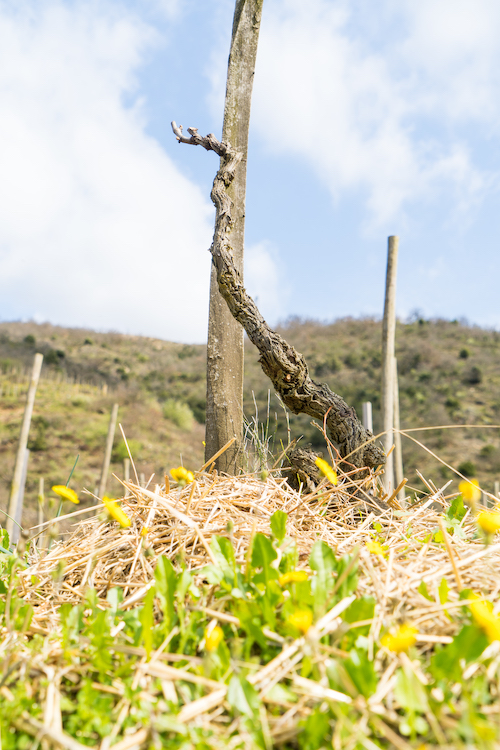
- Training vines on individual stakes: here, the natural shading afforded by the leaves protects the fruit whilst improving aeration during wet weather. “A major change has been phasing out leaf removal on the south-facing side of vineyards which receive the most sunshine”, stresses appellation chairman Yann Chave. “This helps shield the grapes from direct exposure to the sun”.
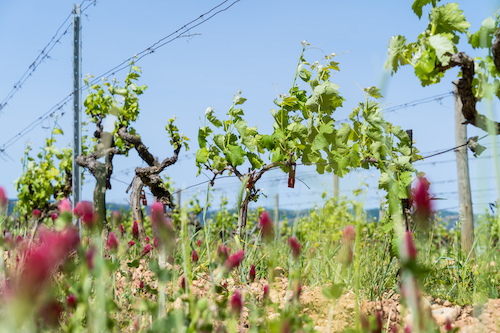
- Cover crops: Increased usage of cover crops between vine rows marks a landmark shift in recent decades, according to Marc Romak at Domaine Mélody. He explains: “The crops are sown in the autumn, then mowed or rolled and left as mulch. On scorching hot days, the technique plays a decisive role because the difference in temperature between bare soils and those with cover crops can reach 10 to 20°C. Covering the soil with mulch reduces evapotranspiration, increasing the water available to vines. This limits the risk of blocked phenolic ripening, often caused by excessive water stress, and helps prevent yield losses from shrivelled grapes, among other causes. The other major benefit of cover crops lies in the increase in organic matter in the soils”. Marc Romak supplements the use of cover crops with manure and compost to enhance organic matter, spreading 8 to 10 tonnes per hectare in the spring. He has witnessed tangible results: “Over a decade, organic matter has risen from 1.1 to 2.5%. It might not seem much but it is in fact considerable because increasing organic matter in poor soils is extremely challenging”. Organic matter is instrumental in preventing soil compaction, fostering microbial life and supporting mycorrhiza, the fungal associations which maintain a symbiotic relationship with vine roots. Mycorrhiza associations promote water and nutrient interactions between the soil and the root system, boosting vines’ resilience to climate stress.
- Late vine pruning: this strategy for mitigating harmful weather mainly protects vines from increasingly frequent spring frosts. “Prune early, prune late, but nothing beats pruning in March, as our grand-parents used to say”, recalls Marc Romak. He is referring primarily to the frost event on 8 April 2021, which caught many off guard as late frosts had become increasingly rare. As winters become milder and bud-burst occurs earlier, late pruning is essential for delaying the onset of buds. “We start pruning in February because we manage 23 hectares and cannot prune everything in March, but we save the most frost-prone vineyards until last to limit the risks”, he explains.